
The Power of Custom Details
SMOCKING, BANDING, AND OTHER FINISHES WORTH OBSESSING OVER
BY KIM ARMSTRONG

After years of working on interiors, I can tell you with confidence: the thing that separates a nice room from a room that stops people in their tracks is almost always something small. Not the sofa, not the rug — it’s the contrast band on the drape, the piping on the cushion, the monogram on the pillow. These are the details that signal craft, and they’re harder to fake than people think.
SKIRTED AND TRIMMED PIECES
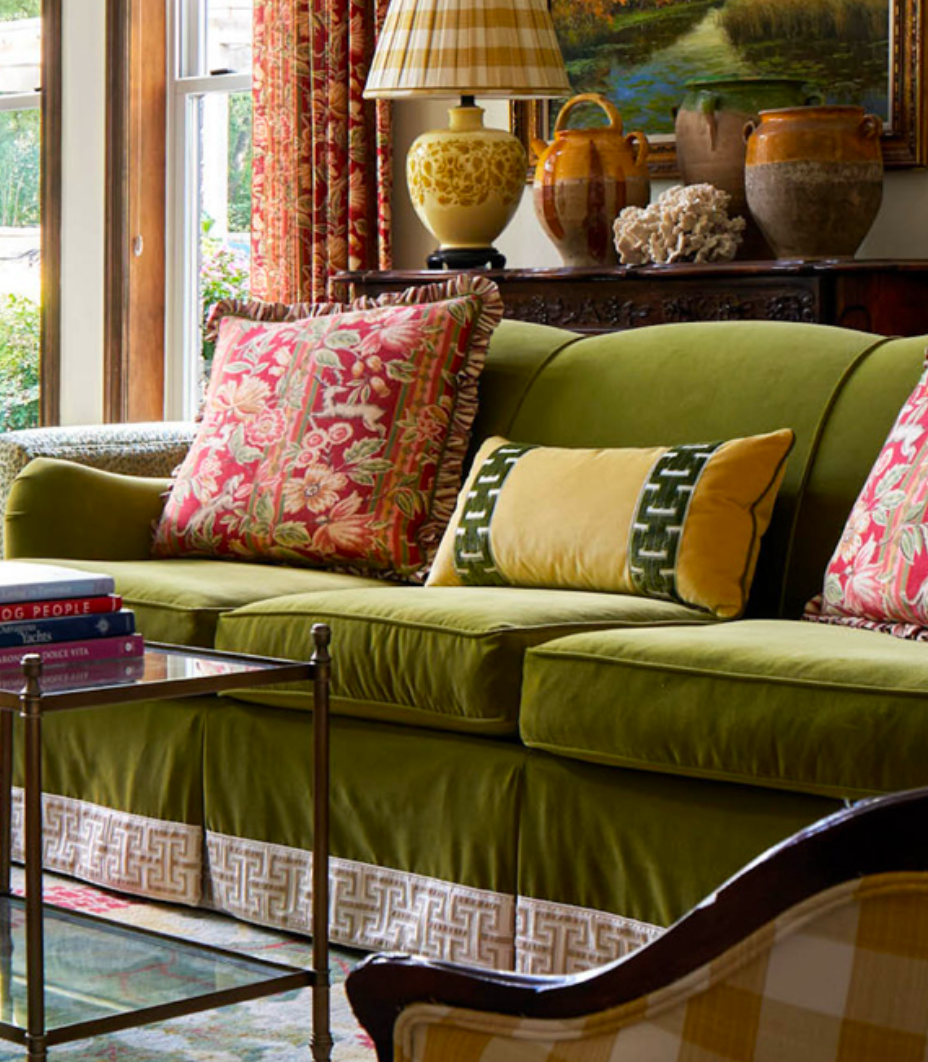
A well-executed skirt on a piece of furniture does something that legs simply can’t — it adds softness and weight to a room simultaneously. A box-pleated bed skirt in a good fabric, a gathered skirt on a vanity stool, a slipcovered chair with a contrast trim — these details bring a tailored, considered quality to a space that’s genuinely hard to replicate with off-the-shelf pieces.
The point with all of these is intentionality. They don’t compete with the rest of the room — they just make everything around them feel more considered. And that’s ultimately what good design is: evidence that someone thought it through, all the way to the end.

BANDING
Banding is one of the simplest ways to make something look genuinely custom rather than off-the-rack. A solid linen drape is great. That same drape with a four-inch contrast band at the leading edge? It reads as intentional — and there’s a huge difference between a room that looks decorated and one that looks designed. You can use banding on drapery, skirted pieces, bedding, pretty much anywhere. It’s a relatively low-cost detail that punches well above its weight.

MONOGRAMMING
This one gets dismissed as precious, but when it’s done right, it’s anything but. A large-scale embroidered initial on a boudoir pillow, a crisp monogram on cocktail napkins, a subtle stamp on a slipcovered chair — these are the moments that make a room feel like it belongs to someone specific. Which is the goal - not creating a room for a catalog, but a room unique to your home.
CONTRAST PIPING
Piping is one of those things people rarely notice consciously, but they always feel it. It sharpens an upholstered piece, defines its shape, and gives it a finished quality that matching piping
just doesn’t achieve. I’ve put contrast piping on headboards, ottomans, dining chairs, and pillows — honestly, if a piece has a seam, it’s worth asking whether a contrasting cord could live there. More often than not, the answer is yes.
If you’re trying to figure out where to start, pick one thing. Band the drapes. Pipe the headboard. Monogram something. These aren’t finishing touches in the throwaway sense — they’re often what the room ends up being remembered for.


Comments